




Deep Learning for Customer Service. It wasn’t so long ago that AI was in the realm of science fiction, a spooky and exciting technology that seemed so powerful and yet so far away. It’s now a reality. The digital age has advanced AI, Machine Learning (ML), and Deep Learning to the point where it’s commonplace, and will soon be ubiquitous. Not only is AI becoming more common in customer service, but it’s creating a high standard of service and customer experience that consumers have come to expect. This means that companies who fail to adopt this new trend could see themselves becoming outdated as they quickly fall behind on customer expectations. Today we’re going to look at how AI and Deep Learning are shaping the customer service landscape and the benefits of adopting this trend, no matter what size your business is.
The Role of AI in Customer Service
Before we can look at how AI and Deep Learning are shaping the customer service landscape, we first need to understand what these terms mean in this context. Let’s take a look.
Artificial Intelligence (AI)
The term ‘AI’ gets thrown around a lot and is sometimes used inappropriately to mean anything to do with modern technology. While AI does play a huge role in modern technology, they are not the same thing. Each generation has formed their own opinion on what AI is. For a lot of people, AI is synonymous with a world run by robots, and one in which humans take a secondary role. Science fiction has largely conditioned this narrative and it’s led to confusion about what AI really is. We don’t live in a world where we have flying cars, a world where robots run everything while humans focus on painting that landscape picture or writing that book, they always planned to do but never found the time. And yet, we’re told we live in the age of AI, so what’s the truth?
The truth is, you’re interacting with AI a whole lot more than you think. If you’ve ever searched for a movie on Netflix, ordered a pizza with Alexa, seen a personalized ad, had your phone camera change its settings when you snap a photo of a flower, then you’re experiencing artificial intelligence. Put simply, AI is essentially just when a computer performs tasks that would normally require human intelligence. ‘AI’ is more of an overarching term that captures any non-human intelligence that would traditionally only be possible with human guidance, and the field itself has a bunch of subcategories. Two of those categories are Machine Learning (ML) and Deep Learning.
So, how does this slot into the larger customer service picture? Well, 53% of companies who use AI identify it as a tool for creating a “customer-first culture”. The idea here is to create a more tailored experience for customers, one in which they can communicate according to their preferences. In the age of digital and AI, customers have high expectations and the most basic of these is that they can choose how and when they communicate with the companies they buy from. Implementing AI technologies creates a more varied, rich, and flexible experience for customers, and importantly, one that reduces friction and frustration.
Machine Learning
Machine learning is when a system is designed to automatically learn and improve without being explicitly programmed to do so. Programmers used to have to program each line of code with a stringent set of rules where there was no room for the computer behaving differently. Machine learning systems learn by repetition, trial and error, and lots of data. If they do enough of this, then they get very good at predicting outcomes or making intelligent decisions without the need for people to intervene.
Deep Learning
Much like Machine Learning, Deep Learning is the process of removing the linear nature of traditional coding practices and allowing the machine to learn by itself. Let’s take a look at a very basic example related to voice recognition, something which is becoming big in customer service.
The code in traditional (non-Deep Learning) voice recognition systems works something like this.
If you hear “3”, connect the customer to X
If you hear “I’d like to see my bill”, connect the customer to X
If you hear “bill”, connect the customer to X
If you hear “complaint”, connect the customer to X
If you hear “complain”, connect the customer to X
What we’re trying to get at is that you need to program for every available outcome, and if you forget to program for all variations of an input, then the computer is completely stumped and no action will be taken. We’ve probably all experienced this. You ring a customer service line and an automated receiver asks why you are calling. When you answer, you’re hit with “I’m sorry, I didn’t catch that”. You then get stuck in an endless loop with a computerized voice saying “can you repeat that”. Of course, even if you’re trying to be as clear and concise as possible if you have anything other than a mainstream accident that you’re in for a bad experience.
With a Deep Learning voice recognition system that you can successfully build after taking deep learning courses, the computer listens for the building blocks of speech. The computer is listening for “err”, “suh”, “sh” “chuh” and other syllables common in whatever language it’s made for. By using huge collections of speech data, the system can begin to learn what outcomes are expected with certain speech patterns, and what the appropriate response is. As long as the system has used enough data to learn, it’s much better at detecting accents, dissecting meaning from unusual phrasing, and delivering the right response.
The principles of AI, Deep Learning, and Machine Learning, can be applied to several areas of the customer service journey. We can use AI to route customers through to the right agents, provide more meaningful solutions to customers, and much more.

Bots and Virtual Representatives
Before we delve into this section, it’s important to talk about the goal of AI in bots and Virtual Representatives. The goal isn’t to completely replace customer service agents, but rather to make them better at their job, make their job easier, and to provide a higher quality experience for customers. Utilizing AI is all about reducing redundancy and maximizing efficiency, which in turn creates a more profitable business operation and fosters a better customer experience. Customer experience is everything in the digital age.
The use of chatbots in the customer service industry has been growing rapidly. It’s estimated that more than 67% of consumers globally used a chatbot in 2018. The same report also estimated that chatbots will be involved in 85% of all business-customer interactions by 2020. It’s a little early to say whether that prediction has been met, but regardless, it serves as a stark reminder of how widespread chatbot adoption has become.
Chatbots can be used in the following ways to add value to your business.
- Provide 24/7 customer service, allowing you to operate outside of your traditional working hours. Customers now expect to be able to contact a company whenever they want.
- Customers can ask endless questions without eating up the agent’s time.
- Instant replies even during peak times so the customer is never left waiting.
- There’s no learning curve for customers. Customers interact with a chatbot in the same way they would when they message anyone. It’s a format they’re used to and it’s accessible for everyone.
- It allows for efficient routing to the right agent.
- Reduces the need for an agent for simple queries. A lot of efficiency and productivity is lost by agents answering simple questions that could easily be handled by a chatbot.
- Less stress for customers. Let’s be real, not everyone likes talking to customer service. You’re generally only talking to customer service is you have an issue, so you’re already feeling some degree of stress. A chatbot offers an alternative to this. In fact, a recent survey found that 94% of respondents “dread contacting customer support”. There’s likely a multitude of reasons for this, a key one being that you don’t know what you’re going to get. You might be passed from agent to agent. There may be a language barrier if the customer service operation is held overseas. You may have to spend endless amounts of time on hold or working your way through a clunky IVR. With a chatbot, you know what you’re getting.
The term ‘virtual customer service representative’ actually has two meanings, and you may come across both of them and be left scratching your head. Some companies and publications use the term to mean customer service agents who only deal with customer service agents through digital platforms, rather than face to face. Others use the term to mean an AI customer service agent. So, if you’ve seen job adverts for “virtual customer service agents”, don’t worry, the robots aren’t competing with us for jobs on popular employment boards just yet.
We’ll be using the term to mean AI customer service agents. Virtual customer service representatives are creating a shift in customer experience. We live in a fast-paced world where customers demand a fast and efficient service. We’re also now in a place where virtual representatives can respond automatically to most or all complex customer inquiries, something which wasn’t possible even 5 years ago.
Intelligent Call Routing
There’s currently a big push for intelligent call routing because it equates to a smoother customer journey and therefore happier customers. And let’s face it, it just makes sense. Why should the customer have to talk to an agent who doesn’t possess the skills needed to address their issue? A fast and efficient service shouldn’t work like that.
Intelligent call routing AI uses a range of different metrics like an agent’s track record, and their skills and training to determine who is the best agent for the call. This system uses AI to make intelligent decisions about the next best actions. For example, it may identify an agent who is already busy on a call, so it will have to find the next most capable agent.
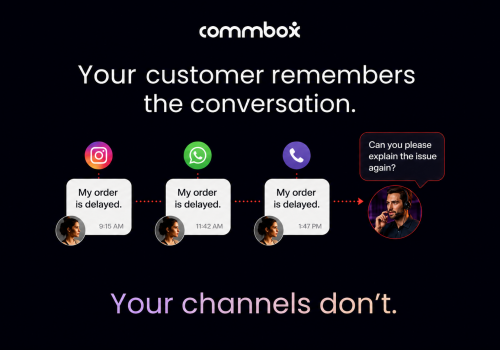
Customers tend to identify two key problems when communicating with customer service teams. The first is getting through to the right agent. The second is wasting too much time explaining the problem. Intelligent call routing is designed to solve these problems. Not only does it route customers through to the most capable agent, but when the customer connects with the agent, the agent will have the expert skills to quickly understand their problem.
Not only is intelligent call-routing the future of call centers, but it’s also set to change the very nature of a call center and those who work in it. According to a survey by McKinsey, 94% of respondents think they will need to hire new agents or train current agents in new skills as automation takes hold.

The Benefits of AI and Deep Learning in Customer Service
Scalability
Old systems were designed by old mindsets. The technology of the past is ill-equipped to handle the flexibility needed in a modern business environment. Businesses are increasingly opting for highly intuitive and scalable omnichannel platforms that work for all businesses, whether you’re an SME or a large enterprise. If you suddenly need more agents or have a huge influx of customers, you want a platform that can handle that, rather than something you need to replace every few years.
Predicting Problems Before They Happen
AI thrives when it has a huge set of data, and one area that it really shines is in data analysis and prediction. Your customer service AI platform will be collecting, tracking, and analyzing data all the time so that it can prevent problems before they happen. If you can predict problems, then you can prevent them and provide a consistently high-quality experience.
Understanding Your Customers
A key part of running a successful business is understanding your customers. With AI, you have the opportunity to gain intelligent and actionable insight from your customer data that can transform the way you operate. AI is great at identifying trends in data, and you can use these trends to run your personalized ad campaigns. If you know that 85% of customers who bought your floral vase are over the age of 55, and you can start marketing that vase to over 55s and hopefully see the profits roll in.
Being Ahead of the Curve
It’s highly competitive out there, and AI and other emerging technologies are only making it more competitive. Companies are now focused on providing a great customer experience, and this means utilizing modern technology wherever possible. This creates an effect where new technology improves the customer experience, and then customers expect more. This cycle repeats itself, with a few companies becoming known as the truly innovative and forward-thinking companies. It’s these companies that set consumer expectations. You may not be able to provide a customer experience as seamless as tech giants like Apple and Amazon who have more money than they can count. But that doesn’t mean you can’t be setting yourself apart from the crowd either.
Customers love a fast, efficient, personalized, and friendly service. They hate redundancy, repetitiveness, and wasted time. If you implement AI, automation, and an omnichannel platform you reduce the friction in the customer journey. Less friction means happier customers who are more likely to come back to your business. More friction means your customers will look elsewhere.
Being More Personal
According to one report, 66% of consumers believe customer service is the biggest spending motivator. The same report estimates that companies to prioritize customer experience above other business goals generate 60% higher profits than their competition. So, we know that a high-quality customer experience is essential to generating more profits and increasing brand loyalty, but what about personalized customer service.
Personalizing your customer service interactions show your customers that you care. You can personalize the experience in many ways. Even something as simple as being more open and friendly will have the effect of building a rapport with customers and leave them feeling appreciated and listened to. On a more technical level, an omnichannel platform that utilizes AI allows you to see a complete customer profile. The technology of old would have customer details spread across multiple systems, often cut off to certain teams. They often didn’t support data transfer, so the agent would have to manually copy details between systems. Of course, this process frequently leads to errors and lost data.
When you have a complete customer profile, you can use this to work out how they want to be communicated with, what approach works best, what products they might be interested in, and so on. You can also use it as an opportunity to talk to them about their previous experience with your company and products by looking at their purchase history. It’s only by talking to customers that you truly understand where the flaws in your business are. However, talking to them is only one part of the equation. Capturing the data and making sense of it is just as important. AI is now getting to a point where it can suggest intelligent next actions almost instantly.