





The demo looks great. The launch numbers are strong. Automation rate: 70%. Time-to-deploy: six weeks. CommBox is an enterprise AI customer engagement platform that enables CX teams to track outcomes, not just activity, across every stage of their AI deployment, and that distinction matters most when renewal season arrives and the CFO asks a different set of questions entirely.
Finance doesn’t want launch metrics. They want to know whether the platform is still performing at month nine, what it actually cost per resolved interaction, and whether the uplift justified the contract value. CX leaders on platforms like CommBox are increasingly caught between two conversations: the one vendors want to have at launch, and the one finance insists on at renewal. Knowing the difference, before the renewal meeting, changes how you instrument, report, and ultimately justify the spend.
Why Isn’t Automation Rate the Same as ROI?
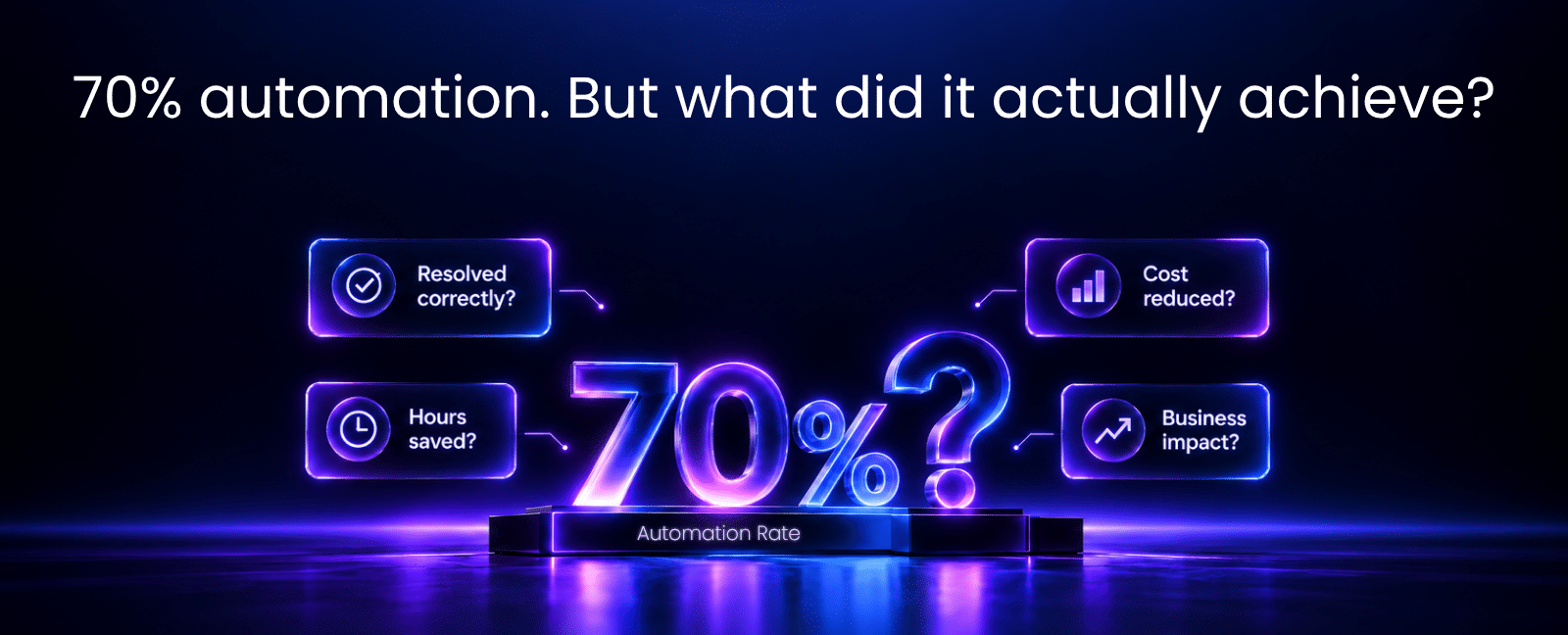
Vendors pitch automation rate because it’s immediate, visible, and impressive. Handling 70% of inbound volume without human intervention sounds like a clear win. But automation rate measures quantity handled, not quality of resolution.
A platform can automate a high volume of low-complexity queries (password resets, store hours, tracking numbers) while quietly degrading on anything more nuanced. When escalations increase in frequency, when post-escalation resolution rates drop, or when repeat contact rates climb because first answers were incomplete, the automation rate stays flattering while the customer experience erodes underneath it.
The same gap exists with deployment speed. Launching an AI layer quickly is a go-live metric, not a sustained-value metric. Even Genesys’s own guidance on proving CX ROI emphasizes tracking value beyond the launch window, connecting platform performance to business outcomes over time, not just activity in the first quarter.
The metrics that matter at renewal aren’t the ones that show up in a launch report. They’re the ones that reveal whether the AI kept its promise over time.
What Should CX Leaders Actually Measure?
Think of this as your renewal-readiness checklist, the numbers your team should track from day one, not scramble to reconstruct at month eleven.
- Resolution Accuracy Over Time: Track containment alongside resolution confirmation: no repeat contact within 48 hours, post-interaction surveys, or verified task completion. Plot it monthly. A healthy AI platform holds steady or improves; a fragile one degrades as query complexity grows.
- Agent Time Saved, in Hours: A percentage of interactions automated is a headline. Hours of agent capacity actually freed up is a business case. Convert automation impact into real hours recovered per agent, then show how that time was reallocated to complex cases or revenue-generating work. Hours are auditable, and finance can put a dollar figure against them. Percentages aren’t, and they can’t.
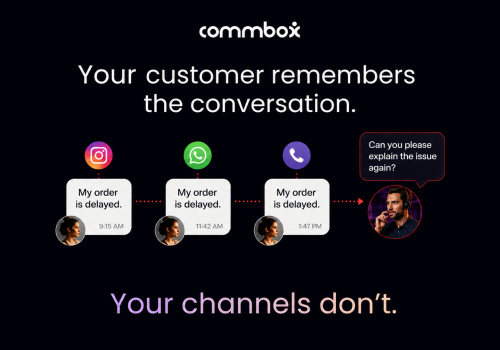
- Escalation Quality, Not Volume: When a conversation reaches a human agent, does it arrive with full context, or does the customer repeat themselves? First-contact resolution after escalation is a metric most teams don’t track, but finance will ask about it when churn numbers surface.
- Tied Business Outcomes: Map AI performance to metrics finance already owns: lead conversion from AI-assisted interactions, retention in AI-served segments, and cost per resolved interaction versus your pre-AI baseline. If you can’t draw that line, your vendor will, selectively.
Start tracking from week one. The teams that win renewal conversations build reporting infrastructure at launch, not in Q4. See how CommBox approaches outcome-based AI performance →
What Does a Real Enterprise Proof Point Look Like?
UPS ASC’s experience with CommBox offers a concrete illustration of what outcome-tied AI measurement looks like when it works.
Automation rate went from 30% to 70%, but the number CX leadership actually built the business case on was different: over 2,000 work hours saved every month, recovered by shifting delivery updates, customs clearance, and WhatsApp requests into workflows tied directly to CRM and backend logistics systems. Interactive delivery updates on WhatsApp reached an 86% resolution rate – a 40% improvement over the notification channels they replaced.
The significance isn’t just the automation increase. It’s what the numbers represent together: hours recovered that finance can put a dollar figure against, and a resolution rate that shows the automation held up in production, not just at launch. That combination – quantified labor savings plus sustained resolution quality – is exactly what a renewal conversation needs to survive scrutiny.
That’s the standard worth setting before renewal: not “look how much we automated,” but “look what that automation actually freed up.”
Bottom Line: The metrics that secure AI renewals connect platform performance to outcomes finance already tracks. Resolution accuracy, agent hours recovered, escalation quality, and measurable business impact are the signals that determine whether an AI platform stays or gets replaced. Build the measurement infrastructure at launch. The renewal conversation will come faster than you expect.
Ready to Build a Renewal-Proof AI Business Case?
The gap between “impressive demo” and “approved at renewal” is a measurement problem as much as a technology one. CX leaders who instrument their AI deployments around business outcomes, not vendor-reported activity metrics, go into renewal with evidence, not hope.
CommBox is an enterprise AI customer engagement platform designed to operate at scale, across voice and digital channels, with the reporting depth to connect AI performance to the metrics your finance team trusts.
Request a demo to see how CommBox measures what matters →
Frequently Asked Questions
What metrics do CFOs actually want to see when reviewing an AI CX platform?
Finance teams typically focus on cost per resolved interaction, reduction in escalation-related handle time, and measurable revenue-adjacent outcomes like conversion rate or retention in AI-served segments. Abstract metrics like automation rate carry less weight without a dollar figure attached.
How is resolution accuracy different from automation rate?
Automation rate measures the share of interactions handled without human intervention. Resolution accuracy measures whether those interactions were actually resolved correctly, confirmed by no repeat contact, task completion verification, or post-interaction feedback. A platform can have a high automation rate and poor resolution accuracy simultaneously.
What makes a good AI escalation handoff?
A quality escalation arrives at the human agent with full conversation context, a clear intent summary, and relevant customer history already surfaced. The customer should not have to re-explain their issue. First-contact resolution after escalation, whether the agent resolved it on the first try, is the metric that reveals handoff quality.
How soon should CX teams start tracking ROI metrics after deploying an AI platform?
From week one. Teams that build outcome-tracking infrastructure at launch (baseline cost per resolution, agent time logs, conversion tracking in AI-served segments) have auditable data when renewal arrives. Teams that try to reconstruct this retroactively are at a disadvantage in the renewal conversation.
How many agent hours can an enterprise realistically recover from an AI deployment?
It depends on interaction volume and use case. Still, UPS ASC’s deployment with CommBox recovered more than 2,000 work hours per month after moving delivery updates, customs clearance, and WhatsApp requests into automated workflows tied to CRM and backend systems. At the same time, automation rate grew from 30% to 70%. Results scale with volume and complexity, but hours recovered is the metric that translates most directly into a renewal business case.
References
- CommBox, UPS ASC Customer Story, backs the automation increase (30% to 70%), 86% WhatsApp resolution rate, and 2,000+ monthly work-hours-saved figures
- CommBox, Prove ROI with AI Agents for Customer Service, supports the outcome-based measurement framing in Section 2
- Genesys, Proving CX ROI: Linking Customer Experience to Business Value, cited for the industry-wide emphasis on tracking post-launch business value, not just deployment metrics
- CX Network, A Guide to Measuring the ROI on AI-Powered CX, industry background on CX ROI measurement frameworks