



Why AI Voice Agents Are Replacing IVRs- Not Phone Systems
For more than three decades, the front door to customer service has barely changed.
Customers call.
They hear:
“Press 1 for billing.”
“Press 2 for technical support.”
Meanwhile, almost everything else inside the enterprise has transformed. Businesses have invested in CRM, ERP, automation, cloud platforms, AI, and digital channels. Customer expectations have evolved just as quickly.
Yet the first interaction customers have with many organizations is still driven by technology designed to move people between queues- not solve their problems.
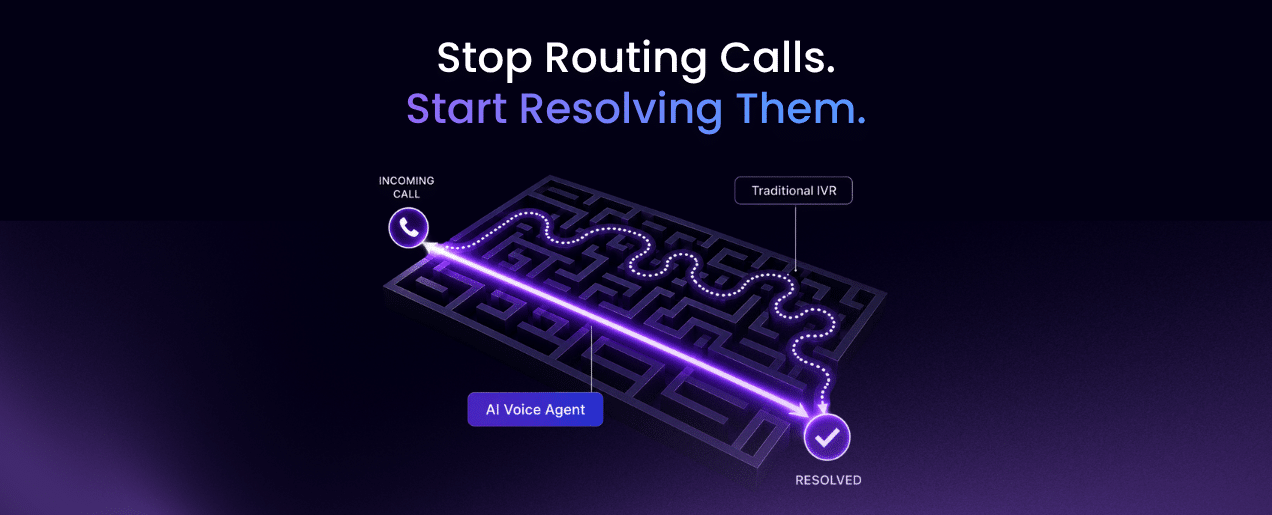
That’s because traditional IVRs were never built to resolve customer requests.
They were built to route them.
And that’s becoming one of the biggest operational challenges in today’s contact center.
Voice Is Still the Most Desired and Expensive Customer Channel
Despite years of digital transformation, voice remains one of the most important- and expensive- customer service channels.
Customers typically don’t call because they want to. They call when they need something important: a payment failed, a policy needs changing, a delivery hasn’t arrived, or an account is locked.
These aren’t conversations customers want routed. They want them resolved.
Instead, the IVR gathers a little information before handing the call to an agent who starts from scratch. Information the business already owns is collected again, customers repeat themselves, and agents search multiple systems before the real conversation even begins.
The Real Cost Isn’t Voice
Voice is expensive because most organizations still rely on routing technology instead of resolution technology.
Legacy IVRs don’t know who the customer is. They don’t retrieve account information, execute transactions, or apply business policies. They simply move the customer to another person.
The result is longer handle times, more transfers, more repeat contacts, higher staffing costs, and lower customer satisfaction.
The cost isn’t created by the phone call. It’s created by everything the technology cannot do.
Every Vendor Will Have Voice AI
Almost every contact center vendor is announcing Voice AI—or will soon.
Understanding speech is becoming a commodity.
Conversation itself is no longer the differentiator.
Execution is.
Talking Isn’t the Hard Part
The technology has evolved so rapidly that almost every AI can have a conversation.
Very few can actually complete one.
Resolving customer requests requires AI that can authenticate customers, access CRM and ERP systems, execute business transactions, follow company policies, respect compliance rules, and know exactly when human judgment is required.
That’s not speech recognition.
That’s enterprise orchestration.
Voice AI Is Becoming a Feature. Enterprise Orchestration Is Becoming the Differentiator
This is the question every organization should ask.
Not: “Does your platform have Voice AI?”
Ask instead: “What percentage of customer requests can your AI actually complete?”
Those are very different questions.
Customers don’t call to talk. They call to get something done.
Anyone can build an AI that can talk. Very few can build one that can do the work.
Voice Is Just Another Channel
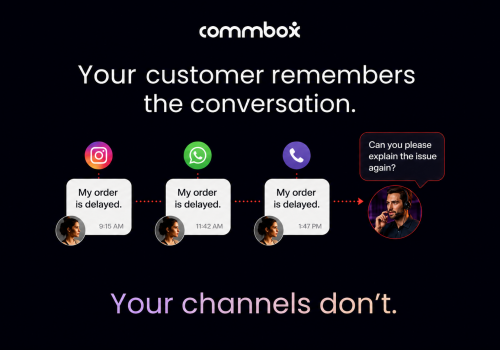
Customers don’t think in channels. They simply expect companies to remember who they are regardless of whether they started on WhatsApp, continued on voice, or finished over email.
That requires a single enterprise AI layer- not separate AI systems for every channel.
The AI Layer Matters More Than the Telephony Layer
The opportunity isn’t replacing your phone system.
Most enterprises already have significant investments in platforms like Avaya, Cisco, Genesys, Amazon Connect, or NICE.
The opportunity is replacing the intelligence that answers the call.
AI becomes responsible for understanding customers, executing requests, and deciding when humans should become involved.
From Routing to Resolution
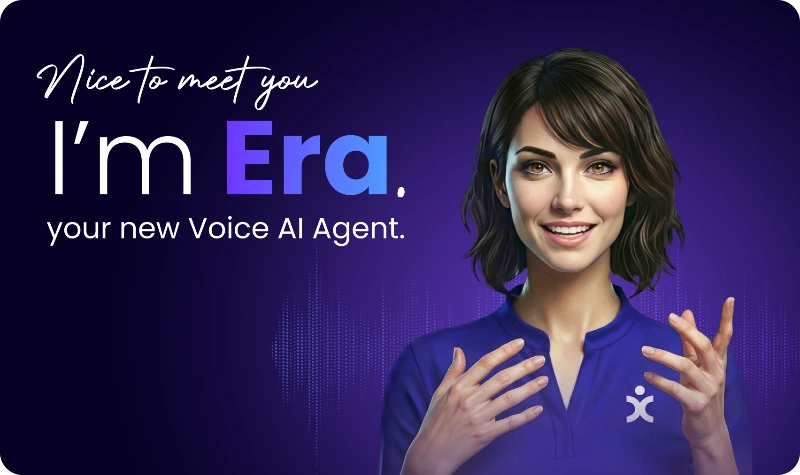
This is the approach behind CommBox Era.
Rather than replacing enterprise telephony, Era sits on top of existing infrastructure as an Enterprise AI Orchestration Layer.
It connects conversations with CRM, ERP, billing, scheduling, knowledge bases, and business applications.
It follows organizational policies, executes approved business actions, and knows when to involve a human.
Because Era shares intelligence across voice, WhatsApp, chat, email, and future channels, customers receive one continuous experience instead of disconnected conversations.
What Changes for the Business?
Organizations reduce routine agent workload, shorten handle times, improve first-contact resolution, lower operational costs, and deliver a more consistent customer experience.
Customers stop experiencing voice as a disconnected channel.
It becomes part of one intelligent customer journey.
The Next Generation of Contact Centers
For decades, contact centers optimized routing.
The next decade will optimize resolution.
The winners won’t be the organizations with the most human-sounding AI.
They’ll be the organizations whose AI can securely execute business processes, connect to enterprise systems, and resolve customer needs from the very first interaction.
Voice AI is becoming expected.
Enterprise AI orchestration is becoming the competitive advantage.
About CommBox Era
CommBox Era is the Enterprise AI Orchestration Layer for customer engagement.
Rather than replacing your telephony platform, Era works on top of your existing infrastructure to connect voice with CRM, ERP, knowledge, business systems, and enterprise workflows.
Trusted by more than 320 organizations and powering over 100 million customer conversations annually, CommBox helps enterprises transform customer service from disconnected routing into intelligent resolution.
Key terms
IVR (Interactive Voice Response)
A telephony technology that uses pre-recorded menus and keypad inputs to route incoming calls. Legacy IVR systems cannot access CRM data or resolve customer queries autonomously- they can only transfer callers to the next queue.
AI voice agent
An AI-powered system that handles inbound voice interactions end-to-end: identifying callers, accessing real-time account data, resolving structured queries without human involvement, and passing context-rich calls to agents when escalation is needed.
IVR modernization
The process of replacing or augmenting legacy IVR routing with AI-driven voice capabilities- without necessarily replacing the telephony infrastructure underneath it.
Intelligent voice automation
The use of AI to handle structured, high-volume voice interactions (payments, scheduling, order status, balance inquiries) within a contact center, while preserving human oversight and deterministic escalation rules.
Enterprise voice AI
AI voice technology purpose-built for enterprise-scale deployments — designed to connect to existing telephony systems, CRM platforms, and core business systems, and to operate within the compliance and control frameworks required by regulated industries.
Frequently Asked Questions
Do I need to replace my existing phone system to use AI voice automation?
No- Era is designed as an intelligence overlay, not a telephony replacement. It connects on top of your existing infrastructure- Avaya, Cisco, Genesys, Amazon Connect, and others- so you keep your current phone system and add AI capabilities without a rip-and-replace project.
How is this different from a traditional IVR or IVR add-on?
Era resolves queries- a traditional IVR only routes them. A traditional IVR cannot access your CRM, resolve queries autonomously, or transfer context to an agent. Era is a full AI voice agent: it identifies callers, retrieves account data in real time, resolves high-volume tasks autonomously, and passes full context to agents when human involvement is needed. It replaces the logic of an IVR, not the infrastructure underneath it.
How is Era different from a standalone voice AI product?
Standalone voice AI products typically operate as separate systems- with their own data, their own logic, and no connection to your broader engagement stack. Era is different. It shares CommBox’s Unified Brain, so voice, chat, WhatsApp, and email all operate on the same customer intelligence. There’s no separate voice data silo to manage.
How long does deployment take?
Most enterprise deployments go live in weeks, not months. Because Era doesn’t require new telephony infrastructure, the integration work is significantly lighter than a full platform swap. Panasonic Connect, for example, was live across five countries in under two months.
What kinds of queries can Era resolve autonomously?
Era handles high-volume, structured interactions autonomously: payment processing, appointment scheduling, order status, account inquiries, policy renewals, and balance checks. For complex, sensitive, or out-of-scope calls, it routes to a human agent with full context- so nothing falls through the cracks.
See Era in action
Voice doesn’t have to be your most expensive, least intelligent channel. Era makes it as capable as the rest of your engagement stack- without replacing what you already have.
Book a demo to see Era working on your telephony stack.
Further reading
- Gartner: Gartner Predicts Conversational AI Will Reduce Contact Center Agent Labor Costs by $80 Billion in 2026. Gartner’s widely cited forecast on the financial impact of AI-driven voice and conversational automation in enterprise contact centers. Directly supports the cost-reduction and AI resolution narrative throughout this article.
https://www.gartner.com/en/newsroom/press-releases/2022-08-31-gartner-predicts-conversational-ai-will-reduce-contac - CX Network: Navigating the future: Saying farewell to the IVR. A neutral industry resource on the case for moving beyond legacy IVR to AI-driven voice. Relevant context for readers evaluating IVR modernization options.
https://www.cxnetwork.com/contact-center/videos/navigating-the-future-saying-farewell-to-the-ivr - McKinsey & Company: The contact center crossroads: Finding the right mix of humans and AI. McKinsey’s analysis of AI’s role in transforming contact center operations, reducing handle time, and improving cost-per-contact- directly relevant to the business outcomes described in the “What changes for the business” section.
https://www.mckinsey.com/capabilities/operations/our-insights/the-contact-center-crossroads-finding-the-right-mix-of-humans-and-ai