



Synchronous and Asynchronous. In this article, we’re going to provide you with the essential guide to Synchronous and asynchronous messaging channels.
We’ll talk you through the more traditional channels categories, then go on to talk about modern meanings of these terms and how they can be assessed for your business in terms of the support channels you could adopt. Then we’ll provide a great way of combining all these approaches into a simple method, to enable your business to manage them better.
But first, here’s a quick rundown to get you moving, then we’ll get into more detail.
Synchronous vs Asynchronous messaging channels? Synchronous messaging is defined as two parties conversing, the conversation has a beginning and an end, typically with instant responses. Asynchronous messaging is defined as a more open-ended conversation, the conversation can be resumed later.
One could define the main difference in terms of how instant is communication, and can it be continuous. However, we normally think of these conversations and their various nuances in terms of the medium that they’re using. And in various mediums, response times and methods can vary.
“One could define the main difference in terms of how instant is communication, and can it be continuous”.
Let me give you a few examples of what synchronous messaging could mean – in business terms, that is.
Examples of synchronous messaging
Phone call
We can also include video calls within this same category. Generally speaking, a phone call is the first major example that most would define as synchronous. Using this medium, a customer would initiate a phone call, speak to an agent, make their request or ask their question. This would then be answered or responded to.
The caller would then typically ask if there’s anything else they can help you with or were there any other questions. Once all queries were answered sufficiently, the call would then end and the caller would hang up.
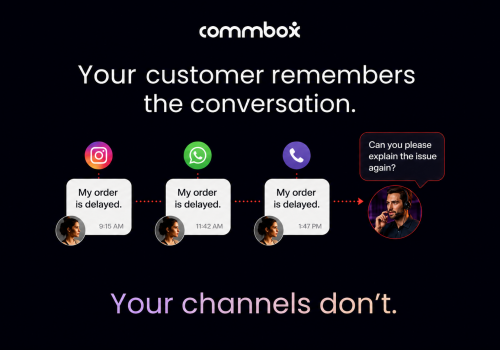
Another difference is that within a company environment, the person receiving a new call from you may not be privy to your previous inquiries. I’m sure we’ve all had those conversations where we have to explain the history of a previous call … before we can discuss our new inquiry!
You would consider email to be synchronous, it’s a two-way conversation that has a start and an end. The only main difference with email is that it has a much slower response time, but the net result is the same. Although you can then email again, this is more likely to be considered as initiating a “new” inquiry, since the previous one was considered “dealt with” – even if you’re using, or replying to the same previous email.
Web Chat
In this example medium, web chat is much the same as a phone call. We initiate the part of the platform that enables us to chat with an agent, we put forward our query and we receive a response. Again, the agent asks if we have any other questions, if not then the call ends.
Support tickets
These are very much closed systems, they generally operate on a very impersonal level much of the time, but are consistent and serve to ensure a smooth path for customers. Submit a support ticket, it gets resolved and the ticket is closed!
You can generally respond to tickets and they will re-open, but there is always a sense of a need to reach the end.
“I’m sure we’ve all had those conversations where we have to explain the history of a previous call … before we can discuss our new inquiry!”
And now some examples of asynchronous messaging…
Examples of asynchronous messaging
Here are a few common examples of asynchronous messaging used in our modern-day business and customer-centric environment.
Text messaging
In texting, generally, you would make contact via a new text message, you would make a request or ask a question for which you hope to get an answer to, or action or resolution, then the text message would end. Except that it doesn’t end…
Text messaging is open-ended, the text remains a scrolling visual element that can be revisited and added to at any later point.
Social media messaging
Opening up a chat box in most social media messaging channels means it remains open until you delete it. It’s not necessary to start and finish the conversation there and then, it can be added to later. Each time, the user receiving the message will receive a notification and can continue the response.
Examples of these types of methods would be Facebook Messenger, WhatsApp, Telegram, Slack, Apple Business Chat, and even platforms like LinkedIn and Twitter.
Synchronous and asynchronous method
There is another factor that affects each of these mediums, and it touches on how deep the experience is for the customer.
That is, as we all know, speaking to someone in person provides a far richer experience on a semantic level. Whereas, it’s difficult to make any kind of personal connection when it comes to text-based contact.
Both Synchronous and asynchronous methods can both fall into this way of defining the customer journey. So, we also need to add this into the mix …what kind of quality of experience do you want your customers to have?
This is particularly true in environments where you’re regularly onboarding customers. The need to maintain the conversation can be crucial.
Now that we’ve looked at the various methods that can define synchronous and asynchronous. You will probably be able to relate this to not only your own experiences when using different mediums, but perhaps more importantly, the experience …and the customer journey, of your own customers.
So, let’s head into our next area of synchronous vs asynchronous messaging. That is the key advantages and disadvantages of both messaging categories.
Synchronous vs asynchronous advantages
Here we’ll start with the advantages of synchronous messaging, and as we mentioned, here we would be including mediums such as synchronous chatbots, phone, video chat and even person to person.

Advantages of synchronous messaging
● Human connection
I would argue this is almost the most important advantage of synchronous communication, it’s not always face-to-face, but it’s still on a deeper semantic level, it’s personal communication which includes most of the elements of voice inflections, emotion and with some platforms body language too.
Nothing comes across quite like a personal service, and these mediums more often than not provide that.
● Bespoke service
Often these mediums enable us to convey the situation in a more understandable light, and where parties can understand and share perspectives.
They can often lead to solutions being implemented that are particular to that customer. Often expedited in order to reach the “end” of the conversation with all parties feeling satisfied with a favorable outcome.
● Efficiency
Synchronous methods and conversations tend to be more to the point. Interactions often follow a standard and generic path and the flow is generally quick and as expected.
We all generally know how these scenarios play out – and how to conduct ourselves in these types of situations.
They’re efficient and mostly streamlined – because companies have learned to provide speedy solutions for most inquiries. That, after all, is the route to dealing with a volume of inquiries and good customer satisfaction ratings.
Advantages of asynchronous messaging
Here’s where some of the lines become blurred, some advantages of asynchronous messaging and communication can also be attributed to synchronous methods too.
These can include email, text, and chatbots. But because of the open-ended method of delivery with asynchronous, we’re going to list them here.
● Continuous Contact
Open-ended means just that – without end. Previously, it seemed acceptable for a company to answer the customer’s query and then say goodbye. If a chat line went quiet, the agent was instructed to inquire as to if the customer still required their services within a 3 to 5-minute pause.
With this comes its own inherent problems that do not help the customer. Calls were often ended, and customers then felt they could not call back and go through the same process again.
It seems far more obvious now to keep the conversation open, the customer should be able to come back whenever they want, at their own pace, without feeling like the company is behind a barrier to which they must first be invited beyond.
● Multiple methods of delivery
With the multitude of platforms available to consumers and businesses, and most of them now utilizing asynchronous technology, the idea of being able to combine multiple methods of communication is something that cannot be ignored much longer.
● Modernization of service
It’s not just the Millennials we have to cater for, Generation Z is now demanding instant, quick and efficient services that they can contact anytime and anywhere. Lives are getting busier, and that requires answers and problems to be communicated more efficiently and effectively.
Generation Z is leading the way in demanding seamless and constant interactions with businesses. The idea of the finality of the “end to a conversation” is fast becoming a thing of the past. They’re also arguably far more willing to access self-help problem solving than previous generations.
● Automation
We’re back to the idea of handling volume again, but having asynchronous methods are advantageous for all concerned. This enables businesses to employ the use of smart services, where bots are armed with a wealth of historical data on query handling and problem-solving.
They can, therefore, be far more efficient in a raft of situations at handling customer inquiries efficiently and effectively.
So, what does all this mean for your business? Well, let’s go on to discuss what evaluations you need to make in your business to select the right channels.

Evaluating synchronous vs asynchronous messaging
When deciding which channel (or channels) offer you need to make a clear assessment, many businesses require more than one.
Having more than one channel means managing different platforms, so that’s where you need to provide your agents with CommBox, which can seamlessly connect numerous channels and agents using a modular, scalable system for adding different synchronous or asynchronous platforms into one simple dashboard.
But back to the assessment…
Assessing synchronous and asynchronous requirements
The best form of assessment you can make should almost exclusively be viewed from the communication perspective of your customers.
Then consider other aspects of how this fits your business model. Namely, your type of business or industry, staff costs and levels, and other aspects like the volume of and complexity of inquiries.
To give you a couple of extreme examples, it would probably not be beneficial for Amazon to employ a Facebook messaging page, the volume of inquiries would most likely overwhelm Amazon staff. Likewise, a small local store would not implement an email system for their daily delivery service, it simply isn’t practical or speedy enough.
Here’s a quick list of how to assess what you need…
- Speed of service – How important is it that the customer receives a quick answer
- Inquiry longevity – Are customer inquiries complex and require a more open and constant conversation
- Personalization – is this a bespoke personal service you’re offering like a consultation?
- Transactional – are your customers mainly fast and transactional
- Volume – how many staff do you have and what volume of inquiries are you receiving (or expecting)?
- Cost of service – are your products or services high profile and premium?
Answering these types of questions should lead you to understand what your customer will expect in terms of overall service levels, and enable you to implement the right medium for the task.
But it doesn’t have to be just one medium, or even two…
Using both Synchronous and asynchronous combination
Managing multiple mediums of both synchronous or asynchronous can be an overwhelming task. But by utilizing modern technology platforms that are capable of combining multiple communication levels makes life much easier for agents.
This is where CommBox comes into play. Implementing the power of CommBox means agents can respond across multiple platforms, where synchronous and asynchronous communications are combined into one historical record, with full analytical data and combining automated and non-automated responses.
With the CommBox system, you can ensure that all your customers are dealt with, efficiently, effectively, on every level and by any agent or bot- with the power to switch between synchronous to asynchronous methods.
Reducing labor costs, customer frustrations, removing barriers and being globally available through numerous channels – and it’s fully scalable! What’s not to like?
To Close
We hope this has been a helpful guide. Implementing numerous communications channels of any type can be daunting, but it doesn’t have to be. Contact us now and we’ll be happy to discuss how we can make your business communications seamless, and your customers happy.