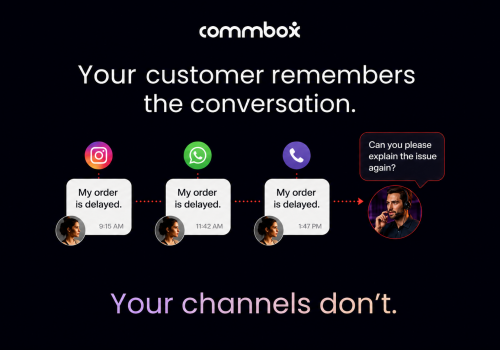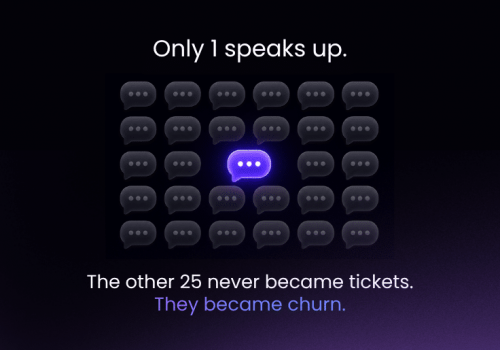







Customer Health Score. At the point when you start your fledgling business, your smaller customer base is easier to manage and simpler to work with. Working so closely with your important new customer base, it’s easier to understand how they feel about your products and services.
As soon as the amount of customers grows it can be almost impossible to take care of your customers and manage them to a satisfactory level, in order to ensure the growth of your stellar new business. It’s far more difficult when your business grows to spend as much time on a personal level with your customers and you may miss important signals.
This is the crucial point at which it’s imperative to collate your customer’s health score and make sure you’re taking every opportunity to understand what makes them tick.
So, let’s take a look below at the quick takeaway answer as to why it’s important to keep a regular check on the health of your crucial customer base, then we’ll dive into more details…
Why do I need a customer health score? In a competitive landscape, in order to retain the current customer base and to create the opportunity in which to build on those hard-won customers, it’s important to create a strategy to monitor your customers’ health score. This will ensure effective and consistent growth and less customer churn.
Now we’ve seen the short answer as to why all companies should make collecting data on the satisfaction of their crucial customer base an integral part of their strategy, in order to help us understand a little better we will start with looking below at exactly what a customer health score actually is.
What is Customer Health Score?
In its simplest sense, customer health scoring is a way of keeping track of, and scoring customers based on any metrics your business considers important. It’ll also enable you to predict the likely outcomes that will develop with your customers in the future.
Once you’ve collated the information, it’s then possible to improve your relationship in order to maximize growth.
It’s important to understand that each company and business will have different requirements from the health score…
For example, one company may want to use the information to predict the level of customer churn, while another may be looking at the likelihood of upselling strategies.
It’s of course, possible to use the score for a number of different business uses and it’s not necessary to purely think in terms of a one size fits all when developing the process.
You might be wondering why you need to monitor your customers’ health and why it’s crucial to your business, so let’s take a look at that.
The importance of customer health scoring
It’s really important to realize that when your customers are satisfied, their needs are fully met and their expectations are exceeded, they are the definitive marketeers for your business.
According to experts, a huge 90% of customers are influenced by positive reviews when buying a product.
When customers experience great customer service or an extraordinary product, there are so many ways in which they can shout it from the rooftops, however, this could also become a negative if you aren’t up to speed with your customer’s health score.
If you’re providing the best service you can, the more likely your customers can give positive reviews and feedback to your next potential customer.
Referrals are immensely powerful when it comes to building or destroying your hard-won customer base. Providing the best customer service, you’re able will ensure that you will not only increase your customer base but also retain your current customers.
Customer health scoring is the key to providing remarkable service. Once you’ve set up your system and collected the necessary data, you’ll have the important insights you need to address each customer’s issues – which will bring you the benefits of greater retention, far less churn, increased acquisition of customers and overall sustained growth.
So, what makes a healthy or potentially, unhealthy customer? Let’s take a look below.
“…when your customers are satisfied, their needs are fully met and their expectations are exceeded, they are the definitive marketeers for your business.”

The healthy and unhealthy customer
In order to work out a customer health strategy that works for your business, it’s important to first understand what it looks like to have a successful or unsuccessful customer.
What is a successful customer?
A simple barometer of whether your customer is successful is if they’re getting the best value possible from your product or service.
What is an unsuccessful customer?
Simply put, unsuccessful customers can be identified as ‘at risk’.
The easiest method of determining which category your customers fall into is simply by monitoring your top customers and also those that you’ve lost.
Analyzing this way will give you clear information as to the common traits that are retaining your customers – or making your customers head off to your competitors! It’s a great starting point at which to begin your customer monitoring process.
In order to best use the analyzed information, it’s important to begin compiling a list of the specific traits. To begin with, make sure you keep your list fairly short to start with, to ensure that you’re not too overwhelmed with endless data, which can mean making sense of the information much more difficult. So, keep the list short …and to the point!
Once you’ve identified the characteristics, you can begin with starting to define the key metrics for your health score.
5 best customer health score metrics
Once you’ve built up your list of unique customer characteristics, it’s time to look at which customers are healthy or those that are at risk.
Each of your benchmarks will be specific to your own business and the outcomes you want to achieve. Obviously, what is important for one company, will not be as crucial to others.
The way you structure your scoring system will be individual. It could be that you’re mainly looking at customer life cycles, or maybe the size or location of where your business is largely coming from. Once you’ve looked at what is most important for your business, you can build in different health scores for each of your chief metrics.
Let’s take a look below at 5 of some of the best and most common metrics used …in order to help you build your customer health score strategy.
How much do customers need you?
If your customer feels really connected to you and your product or service, the less likely they are to turn to your competitors.
It’s really important to look into the types of behaviors that will show you how crucial your offering is to your customers’ life.
If for example, a customer has invested time and energy into integrating their primary business tools into your offering, it’s quite clear it will be far more difficult for them to renegotiate their way through previous technologies in order to start again with a new company.
This measurement will help you in prioritizing your customers’ successful activities.
“If your customer feels really connected to you and your product or service, the less likely they are to turn to your competitors.”

Frequency of visit
There are many reasons why customers aren’t logging in every day. It doesn’t automatically mean they’re filed under risk.
It’s important to understand when your offering is required. For example, it could be your service is only required at specific points in the customer journey, it’s seasonal, or even that they may be away on vacation.
Similarly, a customer who logs in every day may not necessarily be using your product in the most effective way of getting the best value from it.
Crucial to understanding your customers is how often they might log in, or visits your store and is a very useful metrics tool to determine your customer’s health score.
Making sure you delve into the context around your customer’s use or their purchasing cycles is important in order to get the most out of your customer health score strategy.
Customer relationships
It goes without saying that the more fans your product or service can pick up, the better. Having a close relationship with all your customers will make sure they remain close. Making sure you know who are the chief purchasers championing your product significantly reduces the risk of losing them.
Making sure you engage in regular conversations with your customers is crucial to building a good business relationship.
Once you’ve established a good relationship, any ongoing conversations will give you the ability to flag up any potential regular issues which may not be picked up by your health score metrics.
Make sure you build in a point on your customer health score which takes account of any such conversations so the outcomes can be recorded and measured.
Keep in regular contact with any senior decision-makers, as having a good mix of fans and super users is important as this can significantly reduce the risk of your customers disappearing off to your competitors.
Having support at the ground and also the senior level is important to maintain. As of course, senior members of your customer base will carry extra weight in terms of a company’s buying choices.
“Having a close relationship with all your customers will make sure they remain close.”
Customer satisfaction
It’s crucial to consider whether or not your customers are truly using your product or service to its best capacity. As mentioned previously, checking whether they are logging in regularly enough or making additional purchases is important to quantify their overall health score.
Even though a customer may score well on most of your metrics, you can’t automatically presume they are a healthy customer. Using industry-specific tools to measure this, is important to your overall health score strategy.
As you build closer relationships with your customers, you’ll begin to understand how they work and be the first to hear of any recurring or other important issues your customers may be experiencing.
Alternative, if the metrics are currently looking particularly positive for a specific customer, make sure you take other factors into account to get the real picture. For instance, they may be expanding or moving premises, so do make sure that the common-sense element and on the ground knowledge is brought into play when evaluating each customer.
Calculating your health score
The exact calculation you use to calculate your health score will be completely tailored to your products and your customers.
A good benchmark to create your health score strategy is to class your customers as:
- Red
- Amber
- Green
Your health score calculations are completely unique to your business and products. Once you have created the benchmarks for a healthy and unhealthy customer it is much clearer to add which metrics are working the best for you and your needs
Red indicates at risk, Amber is ok and Green indicates a healthy customer.
How your customers reach each stage can be as simple or as complex as fits with your own business needs. Tools can be used to create formulas for you, or you can work them out yourself.
Remember, even if a customer is red, it doesn’t necessarily mean they are looking at going to your competitors, equally a green flag doesn’t necessarily indicate the perfectly satisfied customer. Make sure there is always a space in your strategy for real-life input by your staff members regarding customer conversations and other human input when working out your customer’s health score.
“Red indicates at risk, Amber is ok and Green indicates a healthy customer.”
And finally…
By bringing your health score into your CRM, you’ll get a holistic view of your customer as you’ll see the score in context.
This will help you to improve the score of an unhealthy customer and give you the ability to be able to track the most powerful impact so you can replicate that experience for your amber and red customers.
A customer health score is always a work in progress. You may find that what works today isn’t relevant in six months’ time. Be prepared to change and respond to customer and employee feedback throughout the whole process.
If you need any help or would like to speak to one of our expert team regarding the topic above, do get in touch to make sure you’re creating a stellar customer health score strategy for your business.