



Introduction
Every call center runs on the same math: any friction added to a call- a repeated question, a cold transfer, a customer explaining themselves for the third time- compounds across thousands of calls a day. Many enterprise contact centers still route primarily on skill and queue availability, without reference to who’s actually calling. Across thousands of daily calls, those minutes and dollars compound fast- and the gap between teams that route with context and those that don’t is widening. CommBox is an enterprise AI customer engagement platform that unifies voice and digital customer interactions into a single intelligence layer. This guide breaks down exactly how intelligent call routing with customer history works, why traditional approaches leave value on the table, and how to implement it without touching your existing telephony stack.
Bottom Line: Intelligent call routing with customer history means every inbound call is matched to the right agent or queue based on who the customer is and what they’ve done before- not just what they press on a keypad. CommBox achieves this through its Unified Brain, a shared intelligence layer that pulls live context from CRM records, prior tickets, sentiment signals, and digital channel history, then applies that context to route and hand off calls in real time. The result: agents start every call already knowing the customer, and customers no longer have to explain themselves.
What Is Intelligent Call Routing in the AI Era?
Intelligent call routing with customer history is the practice of directing inbound calls based on a real-time profile of the caller- not a generic menu selection. When a customer dials in, the system looks up their CRM record, recent support tickets, purchase activity, preferred contact channel, and past escalation patterns. It then matches that profile to whoever- or whatever- is best positioned to resolve the issue quickly: a human agent, a specialized team, or, for well-defined requests, an AI agent that resolves the call on the spot.
This is fundamentally different from skill-based routing, which matches calls to agents based on declared competencies- billing team, technical support, Spanish-language queue. Skill-based routing is a queue-assignment tool. History-aware routing is a resolution tool. The distinction matters: skill-based routing sends the call to the right department; intelligent routing sends the call to the right resource- human or AI- with the right context, at the right moment. Platforms like Zendesk and Genesys offer queue-based routing as a standard feature. History-aware routing goes a layer deeper, requiring a connected data layer that persists across every channel the customer has ever used, one that AI agents can act on directly.
Why Does Traditional Skill-Based Routing Fall Short?
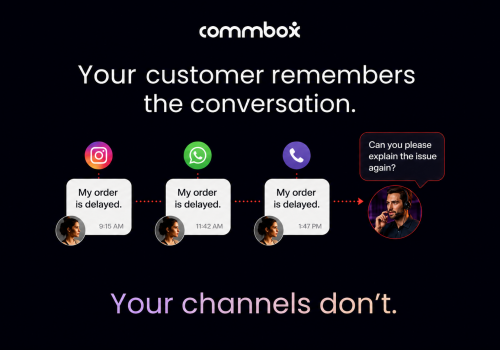
Picture a customer who called Monday about a billing error. Wednesday, they followed up via chat. Friday, they call again. The IVR greets them: “What’s this regarding?” For the third time in a week, they’re starting from scratch- repeating account numbers, re-explaining the issue, re-establishing context the company already has. That friction isn’t just irritating. It’s a measurable cost.
Salesforce research finds that 79% of customers expect consistent interactions across every department they deal with- and separately, roughly 70% expect every representative to have the same information about them. When that expectation fails- and nearly 70% of customers say they get frustrated when transferred between departments because they have to re-explain their issue (Zendesk)- CSAT scores fall and handle time climbs.
The structural problem is that skill-based routing treats every call as a cold start. The IVR presents a menu; the customer picks an option; the call lands in a queue.
The agent picks up with no information beyond what the IVR captured.
If the customer transferred from another channel, or called yesterday about the same issue, or has a history of escalation- none of that surfaces automatically.
In one McKinsey-documented case, a company that deployed generative AI-enabled agents with real-time customer context saw a 9% reduction in handle time and a 14% increase in issue resolution- a signal that the bottleneck is information access, not agent capability. Increasingly, that same context lets an AI agent resolve straightforward cases like this one without a human agent ever picking up.
Skill-Based Routing vs. History-Aware Routing
.
Routing Input
Data Source
What the Agent Knows at Call Start
Typical Outcome
Skill-Based Routing
Agent skill tags and queue availability
Workforce
management system
The queue the call came from
Correct department, cold start
History-Aware Routing
Caller identity, history, intent, and sentiment
CRM, ticket system, and cross-channel interaction log
Full prior interaction history, open tickets, and inferred intent
Correct agent, warm handoff with context pre-loaded
What Customer Data Actually Improves Routing Decisions?
Not all customer data is equally useful at the moment of routing. The signals that most reliably predict which agent or queue will resolve the call fastest fall into five categories:
Prior ticket history. Has the customer contacted support before? For what reason? Was it resolved? A customer calling for the third time about the same issue needs an escalation path, not another first-tier queue.
Purchase and account history. High-value accounts, recent order activity, or subscription tier often indicate the stakes of the interaction- and the appropriate response.
Sentiment from recent interactions. Negative sentiment signals on a customer’s most recent chat, email, or call are strong indicators that routing to a senior agent will reduce escalation risk.
Preferred channel. A customer who always resolves issues via WhatsApp but is now calling may be calling because the digital path didn’t work. That context shapes how the agent opens the conversation.
Escalation and transfer history. Customers who have been transferred multiple times are at churn risk. Routing rules built on escalation history can prioritize direct connection to a resolution-capable agent rather than another queue hop.
Together, these signals let routing logic move from rule-based (“billing calls go to Team B”) to outcome-based (“this customer, given their history, is most likely to be resolved by Agent X with no transfer”).
How Does CommBox’s Unified Brain Power Context-Aware Routing?
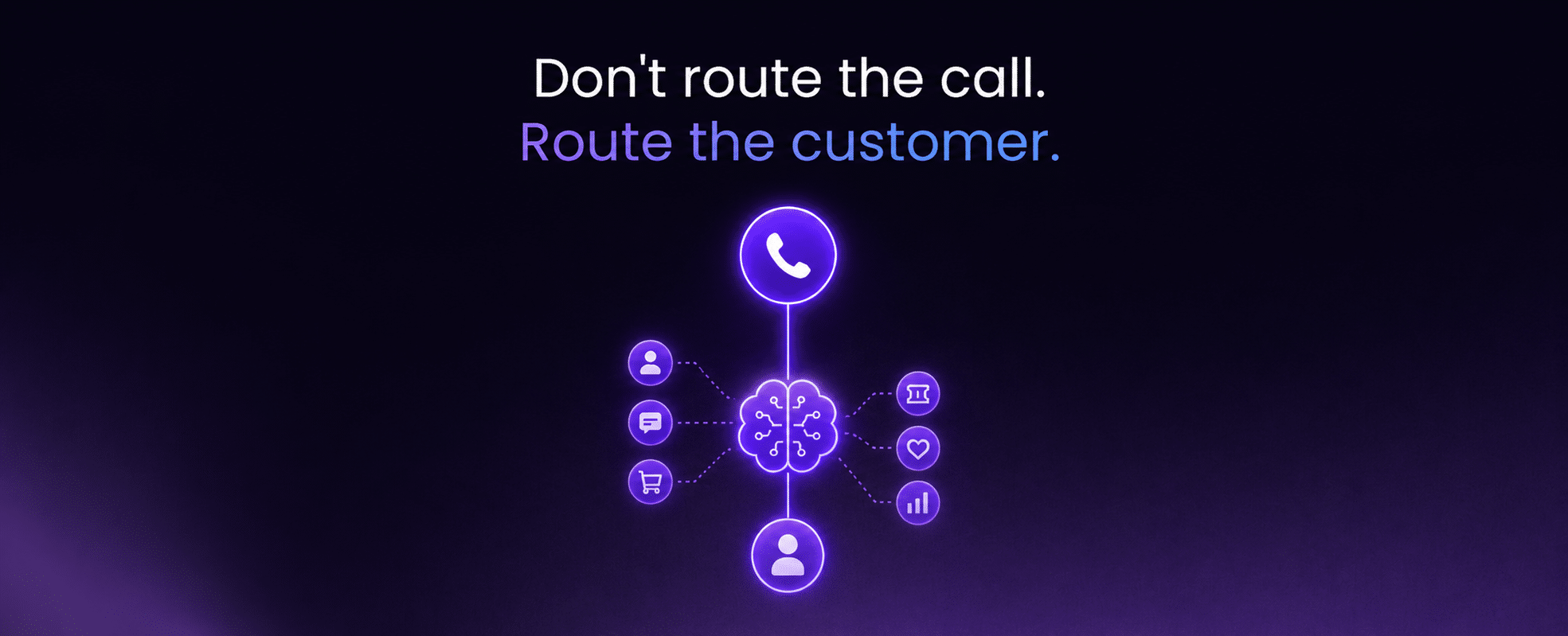
CommBox’s Unified Brain is a shared intelligence layer that sits between your customer data systems and your routing logic- connecting voice and digital conversations so that what happens on one channel immediately informs what happens on another.
In plain terms: when a customer chats with an AI agent on WhatsApp on Monday, resolves part of their issue, then calls back on Wednesday, the Unified Brain carries that entire conversation thread into the routing decision and into the agent’s workspace. The agent doesn’t start from zero. The routing system doesn’t treat Wednesday’s call as a new event.
Here’s how it works in sequence:
- Call arrives; the system identifies the caller. The moment a call connects, the Unified Brain matches the inbound number to a customer record across CRM, ticket history, and digital channel logs.
- Unified Brain pulls history across voice, chat, and CRM. Prior interactions- regardless of channel- are assembled into a single customer profile in real time.
- Context is compiled: intent, sentiment, open tickets. The system scores the call against known escalation patterns, recent sentiment signals, and unresolved issues to determine routing priority and agent match.
- Call is routed with the full profile attached. If the request fits a defined resolution path, the AI agent handles it end-to-end using that same context. If it needs a human touch, the matched agent receives a pre-loaded handoff summary before the call is answered. Either way: no cold start.
This is what CommBox calls a Context-Aware Handoff. The receiving agent sees a full summary of the customer’s history, the intent behind the current call, and any open issues from prior interactions. There’s no need for the customer to re-authenticate, re-explain, or re-navigate a menu.
Critically, the Unified Brain runs on top of your existing telephony infrastructure- Avaya, Cisco, Genesys, and Amazon Connect- without requiring a platform swap. CommBox layers context-aware routing onto the stack you already run. The Era Voice AI engine handles the voice-side automation, while the Unified Agent Workspace surfaces everything to the human agent in a single view: conversation history, sentiment score, open tickets, and recommended next actions.
What This Looks Like at Scale
Consider a distributed service business- dozens or hundreds of locations, high call volume, customers who contact the company through more than one touchpoint before their issue resolves. The typical failure mode isn’t capacity; it’s routing intelligence. Calls get answered fast, but agents start cold every time, and repeat contacts turn into repeat transfers.
With history-aware routing layered onto the existing telephony stack, the pattern changes. Routine, well-defined requests- order status, account updates, straightforward billing questions- get resolved automatically, without a human ever picking up. Everything else routes to a human agent who receives full context before the call connects: prior interactions, sentiment, and intent already loaded into the workspace.
The effect compounds at scale. The more locations and channels a business runs, the more automation absorbs the routine volume- freeing human agents to concentrate on the complex, context-sensitive cases they’re actually needed for.
How to Implement This Without Ripping Out Your Existing Telephony
Implementing history-aware routing is a layered process, not a single deployment event.
Step 1- Audit your current CRM and telephony integration. Most contact centers have partial integrations: call data lives in one system, ticket data in another, digital channel data in a third. Map where the gaps are before defining routing logic.
Step 2- Define routing rules from historical data. Work backward from resolution outcomes. Which agent profiles consistently resolve specific issue types on the first call? Which customer profiles are highest-risk for escalation? Build routing rules from that evidence.
Step 3- Pilot on a defined call segment. Select one call type- returns, billing disputes, account changes- and run the history-aware routing in parallel with existing rules. Measure first-call resolution, handle time, and CSAT against the control group.
Step 4- Train agents on the context layer. History-aware routing changes agent workflows. Agents need to know what information is pre-loaded, how to read the handoff summary, and how to handle cases where the context is incomplete.
Step 5- Expand and iterate. Routing logic improves with data. As resolution outcomes accumulate, refine the rules. The system gets smarter with every call it handles.
Frequently Asked Questions
What is intelligent call routing with customer history, and how does it differ from IVR?
Intelligent call routing with customer history uses live CRM data, prior interaction records, and behavioral signals to match an inbound call to the right agent or queue before the call is answered. Traditional IVR (interactive voice response) routes calls based on what the customer presses on a keypad in the moment- with no reference to who the customer is or what they’ve done before. History-aware routing connects those two layers, so the routing decision is informed by context, not just menus.
Does implementing history-aware routing require replacing my existing phone system?
No. Platforms like CommBox integrate directly with existing telephony infrastructure- including Avaya, Cisco, Genesys, and Amazon Connect. The intelligence layer sits above the telephony stack and enriches routing decisions without requiring a platform change. Your agents use the same telephony endpoints; they simply receive more context when a call arrives.
What data does my team need to have in place before deploying context-aware routing?
A CRM with reasonably clean customer records is the baseline. Prior ticket history, channel interaction logs, and account status data improve routing accuracy significantly. The more historical data the routing logic can reference, the more precisely it can predict which agent or queue will produce the best resolution outcome. CommBox’s Unified Brain is designed to pull from multiple connected systems, so the data doesn’t need to be in a single repository.
How do Context-Aware Handoffs affect agent training and onboarding?
Context-Aware Handoffs reduce the information-gathering burden at the start of every call, which shortens the learning curve for new agents. Instead of needing to know every possible customer scenario from memory, agents work from a pre-loaded summary of the customer’s history and current intent. Training shifts from “how to gather information” to “how to act on information already present.”
Can intelligent routing with customer history work across voice and digital channels simultaneously?
Yes- and cross-channel consistency is one of its primary benefits. CommBox’s Unified Brain maintains a single customer record that spans voice calls, messaging apps, email, and web interactions. A customer who started an inquiry via WhatsApp and escalated to a call arrives at that call with their digital conversation already visible to the agent. Routing decisions account for the full journey, not just the most recent touchpoint.
See It in Action
Routing calls with full customer context isn’t a future-state goal—it’s deployable on your existing infrastructure today.
See how CommBox routes calls with full context- book a demo.
Explore Era Voice AI and the Unified Agent Workspace to understand how context-aware routing and agent enablement work together.
References
- Salesforce, State of the Connected Customer, Sixth Edition: 79% of customers expect consistent interactions across departments; separately, roughly 70% expect every representative to have the same information about them. [Source: Salesforce- https://www.salesforce.com/content/dam/web/en_us/www/documents/research/State-of-the-Connected-Customer.pdf]
- Nearly 70% of customers become frustrated when transferred between departments because they have to re-explain their issue. [Source: Helpscout, “75 Customer Service Facts, Quotes & Statistics” — https://www.helpscout.com/75-customer-service-facts-quotes-statistics/]
- McKinsey research found generative AI-enabled agents achieved a 9% reduction in handle time. [Source: McKinsey, cited in CMSWire, 26 Call Center Statistics, March 2026 — https://www.cmswire.com/contact-center/16-important-call-center-statistics-to-know-about/]