





Business plans, advertising, sales pipelines, fulfillment… when you start a new business, there’s a lot to think about.
But behind the buzzwords – the metrics, the math, the marketing – there’s one good, old-fashioned principle that underpins every successful business in the world.
Customer service.
Because keeping your customers happy isn’t just good for your karma. It’s good for your bottom line, too. A whopping 93% of customers will make repeat purchases from companies that offer excellent service, while 83% feel more loyal to brands that respond to – and resolve – their complaints.
Of course, all businesses would love to provide world-class customer service – but it’s easier said than done. Most startups don’t have the time, energy, money, or resources to commit to basic customer service – let alone a high standard of one.
Fortunately, customer service technology has improved – and we’re walking you through everything you need to know about it below. So read on, as we unpack the key customer service channels for startups: what they are, why they matter, and whether they’re suitable for your business.

Live Chat
These days, more consumers than ever (69%, in the US) are demanding a live chat feature as standard. And even more – 73%, according to Invesp – find this customer service channel the most satisfactory way to communicate with a company.
According to data from Gartner, a preference for live chat spans the generational divide, too. Live chat is the top option for shoppers aged 18-49 (all millennials, with some Gen X and Z thrown in). And it’s easy to see why it’s so popular among key demographics.
Live chat does what it says on the tin – allowing your service team to converse, in real-time, with your customer.
- For phone-phobic Gen Y, it’s an infinitely more palatable route to seeking support than picking up the phone – particularly when hours of tinny, terrible hold music await
- For the younger Gen Z, live chat works because it harnesses technology and is available within a click
- And, for the older Gen X, live chat still comes with that fundamental human element – you still always know that there’s an actual human on the other end of the line
So should your startup embed a live chat feature into its website? Absolutely. It’s surprisingly easy to do, particularly if you choose to build your startup’s site with the right website builder.

Weebly and GoDaddy are among the website builders that allow you to simply, seamlessly add a live chat feature to your site. Unfortunately, popular website builder Squarespace (unlike Wix) doesn’t offer a live chat feature. Still, other platforms do – though typically, you’ll need to upgrade to a premium plan to be able to do this.
Similarly, other website builders such as Zyro (though it doesn’t offer a live chat tool in-house) integrate with Facebook Messenger, so you can still chat with your customers in real-time. Plus, if the website builder you’ve crafted your site around doesn’t have a built-in live chat feature, you can add one with a third-party company like CommBox – that should do the trick.
Find out more about how CommBox can help you deliver an excellent customer service
Contact Form
Sometimes, the tried and tested methods are the best.
And while a contact form will never be the most innovative of customer support channels, it’s still one of the most intuitive – for both you and your customer.
All the main website builders allow you to embed a contact form quickly and easily into your site. Through this, your customer can write their request, leave their name and contact details, and wait for you to get back to them.
Essentially, it’s a highly hands-off form of customer support. You can respond on your schedule – taking the time to assemble the information required to deal with the request – and deliver a better response. Providing, that is, that the customer is happy to wait: contact forms aren’t the most convenient (nor rapid) of support channels.
Still, we recommend having one on your website. Even if it’s not going to be the first port of call for the lion’s share of your customers, its presence implies poise and professionalism. Plus, considering it’ll take two minutes to add in, a contact form is an absolute no-brainer.
Knowledge Base
There’s no service quite like self-service. So, when you’re a time-poor, cash-strapped startup, a knowledge base should always be one of your first customer service channel ports of call.
A knowledge base (sometimes called a ‘Help Center’, ‘Support Hub’ or similar) is a selection of customer support articles on your site. These could be commonly asked questions, product information, how-to articles, troubleshooting guides, or manuals. Basically, anything that can help your customer solve their issue – before they have to come to you.
In this sense, a good knowledge base acts like an initial filter – screening your customer service team’s time (and patience) from a myriad of minor customer service inquiries. It might take a bit of time to get your knowledge base set up and thriving, but – fortunately – most website builders offer this functionality.
Better still, with the right system in place – such as a customer service CRM (Customer Relationship Management system – a knowledge base becomes a living, breathing document. You can use prior solved customer issues as a way of informing new knowledge base content, thereby ensuring that your support documentation scales as your business does – and relieving the load on your customer service team.
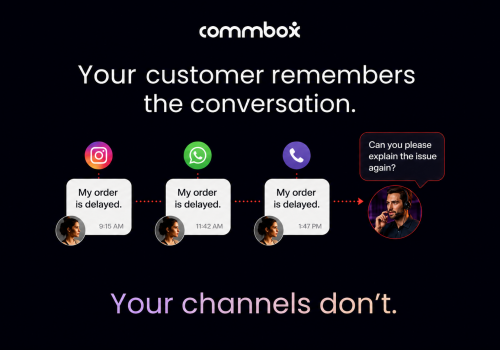
If you wish to ease your work even more, use an omnichannel customer communication platform like CommBox. The unique thing about CommBox is that it allows you to communicate with all your customers across digital channels from one place. Plus, it integrates with any CRM, giving you maximum control over your customer service.
Phone
Swathes of millennials may be averse to speaking on the phone, but – as the data implies – this may not always be the case. Particularly when it comes to requesting customer service: one study suggests that three-quarters of consumers will still choose to interact with a real person, if it’s an option – even as customer service technology improves.
What does this mean, then, for the telephone as a customer service channel?
Well, despite the aforementioned prevalence (and popularity) of live chat, one study states that 76% of consumers actually prefer phone as a method of contacting customer support representatives.
So should your startup offer phone support? Does the data tell the truth – and is it worth the effort?
The short answer is yes – certainly. Though phone support isn’t without its pros and cons.
The Good:
- Phone support is an inherently more personal, more direct way for customers to seek assistance from a business
- Phone support is often perceived as being quicker, more immediate than its email or contact form-based counterparts
- More simple, too: a customer simply has to pick up the phone, dial a number, and is patched straight through to an agent
- With the right software, it’s easy to make, record and review support phone conversations. CommBox can be a great software for that, as it allows you to make voice and video calls to actual phone numbers. These can then be audited, analyzed, and shared, then used for training purposes: to help future staff learn from the successes and failures of their predecessors.
The Bad:
- Contact centers are notoriously expensive to maintain – particularly all-night ones. If you want someone available to answer your customers’ calls 24/7 (and to hire the staff to do so) it’s going to be expensive
- Under-resourced call center teams and high volumes of customers aren’t a good mix. Pair the two, and you’ll end up having to put customers on hold – often for lengthy amounts of time
- This, in turn, can lead to frustrated customers – particularly if you’ve had them listening to an interminable loop of Barbra Streisand covers. The longer you make your customers wait, the more aggrieved they’ll become – and the less likely they’ll be to stick with or recommend your brand in future

Despite its drawbacks, offering phone support is almost always a good idea, even simply showing your customers you care.
However, the most important element to remember about phone support is that the more you scale it, the harder it becomes to maintain quality. When it’s just you and your startup’s co-founder, answering calls from your living room, the support you can offer is fantastic.
As your business and customer base grow, though – and you have to begin outsourcing your phone support off-shore or less well-trained and qualified call center staff – call efficiency can decline.
So train your phone staff well. And never let quantity displace quality.
Chatbot
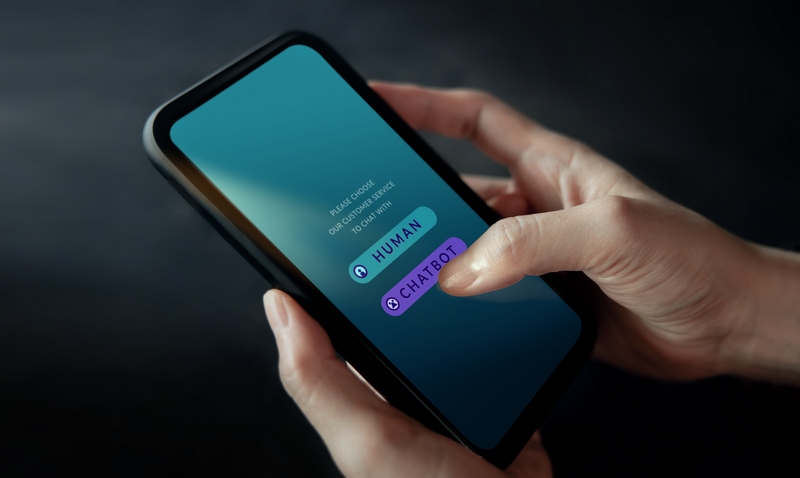
Chatbots have a lot in common with live chat tools.
Both are typically available with a click via a company’s website. Both offer hassle-free, effective routes to expedite customer service.
The key difference, though? Live chats are operated by actual customer service agents. Chatbots aren’t.
Instead of allowing you to converse with your customer in real-time, chatbots instead draw on AI (artificial intelligence)-driven algorithms. These are designed to assess your customers’ queries – asking questions and analyzing their answers – before offering them instant automated responses.
This could be directing the customer to a particular article on your knowledge base or your FAQ page. Alternatively – if the customer’s issue can’t be solved through automation – the chatbot can direct them to one of your agents.

Through that lens, chatbots aren’t designed to operate in isolation, but as part of a system. To interact dynamically with other support channels – phone and live chat in particular and your knowledge base – to provide a holistic customer service experience.
Some of the biggest advantages of using chatbots are:
- They don’t require wages (though there might be a small upfront investment)
- They don’t need sleep, so they can operate around the clock
- They rely on artificial intelligence – so there’s no chance of human error causing customer dissatisfaction
Since chatbots are a little more technical – and can be complicated to design, build, and set up – they’re not typically a feature you can add to your business’s site with a website builder.
Wix, for instance, doesn’t support chatbots. However, you can use the ‘Wix Automations’ feature to set up automated chat messages – to welcome visitors to your site, request them to take action, or let them know you’re not there and will be back shortly. Alternatively, you should be able to integrate your site with a chatbot from a third-party provider – though costs here can be prohibitive.
CommBox can provide you with customizable chatbots uniquely built for your needs.
With CommBox, you can have your unique and personalized bots in just a few minutes.No coding skills are required. Once your chatbot is ready, you can offer 24/7 support on multiple languages and communication channels such as Websites, WhatsApp, Facebook Messenger, Telegram, Instagram, and more. The chatbots are implemented in your website or application, providing a seamless customer experience.
It’s strange to think of a world in which email – once the shining light of modern communication technology – is outdated as a customer service channel.
But that’s the reality we face – and that modern startups must work with.
With live chat dominating the convenience stakes, contact forms offering the best speed benefits, and phone calls retaining the most personal touch, email is quickly becoming an obsolete offering.
In fact, many large companies no longer provide an email for customer support inquiries. So should you?
Our answer is no – providing you have other, more effective service channels in place. Handling customer queries via email is generally more time-consuming than other modes of communication, and comes with a range of pitfalls, including:
- The customer may struggle to explain their issue clearly
- The customer (or your business) may not respond for many hours, making the conversation a long and drawn-out one
- It can be difficult to verify the identity of someone emailing in for support. This may be key: particularly if your startup deals in finance or banking
- Placing your company’s email address in the public domain leaves you open to a multitude of spam and cold emails. Not ideal!
Of course, there’s usually no harm in leaving an email address somewhere on your website. After all, it can be reassuring (especially for more traditionally minded customers) to seek support through a familiar medium.
However, the key is not to rely on email-based support as a primary customer service channel. Instead, set up a knowledge base, and attempt to funnel your customer to a relevant article or FAQ section. If that doesn’t work, utilize a chatbot to narrow down their inquiry, and engage them via live chat for personalized service.
Basically, email can be part of a good customer service strategy – but not the crux of it!

Choosing the Right Customer Service Channel: The Basics
Ultimately, all the customer service channels we’ve discussed here are important for startups. Whether it’s live chat for convenience, phone support for a personal connection, chatbots for efficiency or email for recognizability, each channel offers something for everyone.
Yet none should operate in a vacuum. These customer service channels are designed to work together – operating dynamically and in harmony to achieve a versatile, scalable consumer support infrastructure.
In other words, an omnichannel customer service approach.
And don’t forget that the very best customer service strategies are only as good as the people executing them. So treat your service team well, and make sure that they, too, have the right support systems in place to help them excel.
They’ll thank you for it – and your customers will, too!